
Don't Panic, Be Playful
Part 4 of 4 - On permission, play, and what we are really building.

Around age 13 or 14, I read The Hitchhiker's Guide to the Galaxy.
Even though it is a sci-fi novel, I like to believe that Douglas Adams wrote a spiritual book in disguise. I always jokingly say, for me, that was my first spiritual book.
Douglas Adams took two things that don't obviously belong together, playfulness and profundity, and married them into a story about the absurdity of existence.
A man gets picked up by an alien spaceship the same morning Earth is demolished to make way for a hyperspace bypass. The answer to life, the universe, and everything turns out to be 42, yet nobody knows what the question was.
It sounds like a joke, it is, and yet something in that book quietly rewired me. It said: the universe is fundamentally ridiculous, and the most honest response to that is not anxiety, not hustle, not optimisation...it's delight.
To be playful and profound at the same time has always been the natural way of navigating this world. I guess this book gave me the allowance I needed to read to fully embrace it.
Because I don't think play is what you do when the serious work is done. I think play is the mode of being that makes serious work possible and meaningful.
Playfulness is not a personality trait or a leisure activity; it's a way of navigating, seeing, and experiencing the world.
And I think most of us knew this once, before we got buried under deadlines, under performance, under the accumulated weight of who we think we're supposed to be.
The self that knew how to play never really left, I guess it just got quieter as we grew up?
This is the shared philosophy that brought Justin Davis and me together to start Eleven Dunbar. And the more we build it, the more we realise what it's really for: to remind people of this intuitive way of being.
To give them the same allowance that Douglas Adams gave me: the permission to come home to the natural way of being they never really lost.
It is funny that Eleven Dunbar reminds me of this more than I like to admit. What I mean by this is that it reminds me of my own nature, which I am returning to, which was always there, yet buried in the noise of one’s own mind.
I spent a good chunk of my 20s dedicated to understanding, experiencing, and researching play. During my short stint as a PhD researcher at the University of Helsinki, I published a book chapter on the role of the teacher in game-based learning, arguing that games should not be seen merely as tools to motivate students, but as a genuine opportunity for learning, empowerment, and ownership in the classroom. 1
With Eleven Dunbar, I get a chance to close this circle, which I never thought I would get to do, but this time it is not for education; it is for people like you and me.
Realising this brings me tears, as it feels like coming home after years of wandering. I am still wandering in the gravity world, but I have arrived back home in the sacred world.
Just the other day, I stumbled upon research that I find quietly revelatory. Wulf, Bowman, and colleagues published a study titled Video Games as Time Machines: Video Game Nostalgia and the Success of Retro Gaming, which found that the reason adults return to childhood games has nothing to do with fun. 2 It is about self-continuity, an unconscious attempt to reconnect with a version of yourself that still exists somewhere underneath all the adult noise. What makes retro games more powerful than old songs or films is the interactivity. You do not simply observe the past; you re-experience it. Motor memory, spatial memory, the whole embodied archive of who you were fires at once.
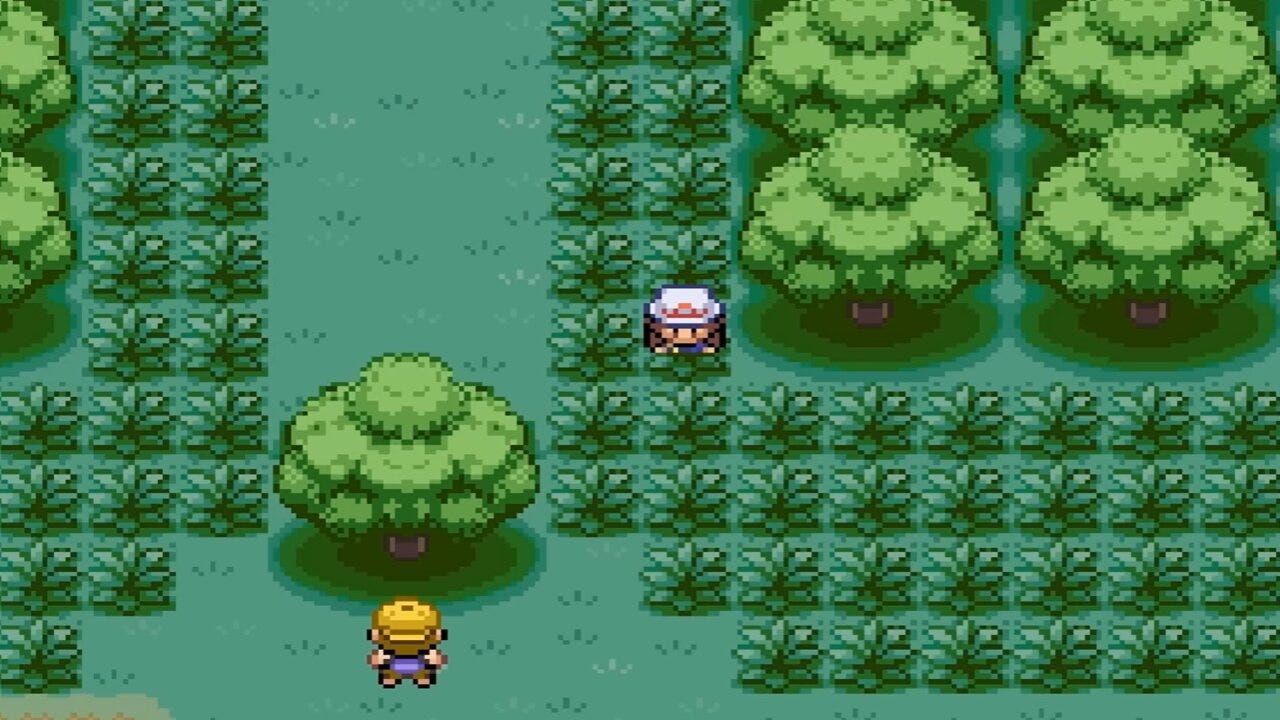
This connects to something psychologists call the Reminiscence Bump, the phenomenon where memories from roughly ages 10 to 25 are stored neurochemically deeper than anything that comes after, because they are formed during the period when identity itself is being shaped. 3 The 90s were not just a time period for those of us who grew up in them. They are literally fused into who we became, and the reason that era feels like more than nostalgia is that it is closer to identity than memory.
Which means the self you are trying to find was never really gone. It did not disappear. It got buried, slowly and quietly, under deadlines and performance and the accumulated weight of who we think we are supposed to be. What feels like searching is actually closer to remembering. And what feels like becoming is actually closer to returning.
It was this research and a conversation with Andrew Markell that reminded me to write about play with more rigor. To show, not just tell, that play is nature’s truism. It is how the universe operates, and it is a more powerful vehicle for navigating life than most of us have been given permission to believe.
Not as a philosophy to admire from a distance, but as something lived and felt; a vehicle to help others breathe better, to create authentically, to parent better, to love deeper, to laugh harder, and to help people be seen, and to see each other.
Far more powerful, I would argue, than any guru, any elevation of Jungian consciousness, or any intellectual/mystical framework that keeps the insight safely in the head and out of the body. I call this intellectual masturbation that feels confident and sounds smart, but keeps living in the realm of the mind, and never closes the bridge to full embodiment. (Sorry for that last one - I couldn’t resist).
That is what Eleven Dunbar is really for. The same permission Douglas Adams gave me at 13, to be playful and profound at the same time, to take life seriously without taking yourself too seriously, to trust that delight is not a distraction from the work but the very source of it, given not to one person through a book, but to a community of people, together.
This is not Justin’s vision, nor is it mine. It is older than both of us. It is a truism of nature that humans come alive in play, in genuine connection, in creative expression, and in the company of others who give them permission to remember who they already are.
The next generation won’t be disconnected specialists, but Adaptivists: humans who can feel, connect, create, and synthesize. People who remember that growth is not a solo project, and that becoming extraordinary was never the real goal, but rather remembering what was always already there.
Eleven Dunbar exists to help this generation find each other; to move from isolated individuals into a living network, from self-optimization to shared evolution, and from performance to presence.
A vibrant field of humans who play, build, reflect, and rise together.
So, don’t panic, be playful.
Molin, G. (2017). The Role of the Teacher in Game-Based Learning: A Review and Outlook. In Ma, M. & Oikonomou, A. (Eds.), Serious Games and Edutainment Applications, Vol. II (pp. 649–674). Springer. https://doi.org/10.1007/978-3-319-51645-5_28
Wulf, T., Bowman, N.D., et al. (2018). Video Games as Time Machines: Video Game Nostalgia and the Success of Retro Gaming. https://researchrepository.wvu.edu/faculty_publications
Conway, M.A. (2005). Memory and the Self. Reminiscence Bump. Journal of Memory and Language, 53(4). See also: Sedikides, C. & Wildschut, T. (2016). Nostalgia fosters self-continuity by augmenting social connectedness. Emotion, 16, 524–539.
I agree. I once read somewhere that a game is "voluntary overcoming of unnecessary obstacles". I think what makes playing so productive is that there is very little real-world risk attached to it and people take part freely. Not much is on the line, so I can try out what I want. It's like ordering an avocade milkshake to try it out, but if I'm broke and this is my dinner, I would for sure order the safe option.
Such a beautiful post!
One thing I’ve noticed is that when we laugh, we remember.
Who we are, memories that are buried. Feelings and emotions that are stuck release. Sometimes we’re even moved to tears.